Blank Banner with Flowers – A Working Designer's Take
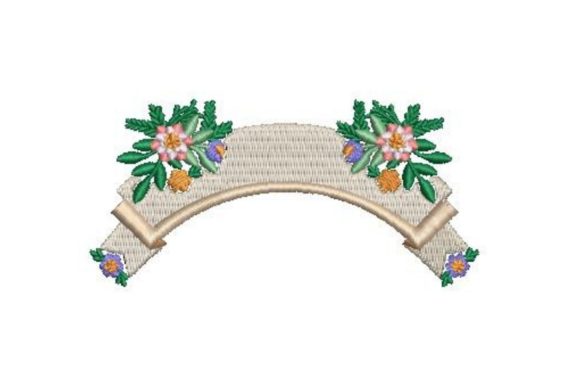
I have stitched hundreds of floral designs over the years, and the Blank Banner with Flowers design caught my attention the moment I loaded it into my embroidery software. There is something genuinely useful about a design that understands restraint. The blank banner is the hero here—it invites personalization without fighting the surrounding floral elements for attention. From a working designer's perspective, that balance is harder to achieve than most people realize.
What This Design Gets Right Before You Even Thread Your Needle
Opening the file, the first thing I noticed was how cleanly the banner shape sits within the floral composition. The flowers frame the empty space rather than crowding it, which means the blank area actually reads as intentional whitespace rather than an afterthought. This is important because many so-called blank banner designs either make the banner too small to be useful or let the decorative elements overwhelm the negative space where your lettering or personalization will eventually live.
The spring vibe mentioned in the description is accurate without being overly seasonal. The floral elements have a light, airy quality that works for Easter and Mother's Day projects, but I could just as easily see this stitched onto a linen pillow cover for year-round home decor. That versatility matters when you are building product inventory as a small shop product seller or Etsy seller who cannot afford to stock designs that only sell for two weeks out of the year.
Where This Design Truly Belongs In A Real Project Lineup
I tested this concept mentally across several project types I have produced for clients over the years. My strongest recommendation is custom apparel, particularly on medium-weight cotton or cotton-blend sweatshirts. The scale of the floral border and the generous banner area creates a natural focal point on the upper back of a crewneck or the center chest of a relaxed-fit tee. If you run a craft business or sell handmade product at markets, this is the kind of design that stops people at your booth because the blank banner practically asks them to imagine their own name or a short phrase stitched inside it.
Another natural home is the tote bag design category. I have watched customers at craft fairs pick up blank tote bags, squint at them, and try to picture what they might look like personalized. A design like this solves that visualization problem instantly. The flowers do the decorative heavy lifting, the banner provides the canvas for a monogram or short quote, and the finished product looks intentionally designed rather than cobbled together.
The Quiet Strength of Blank Space In A Finished Product
There is a psychological element at play with blank banner designs that newer embroidery artists sometimes overlook. When a customer sees a finished product with a personalized banner, they perceive higher value than they would for the same item with a standalone floral motif. The banner signals that someone took the time to customize the piece specifically for them or their recipient. For personalized gift sellers, that perception directly translates into higher conversion rates and fewer price objections.
A Real Project Scenario Worth Considering
Let me walk you through how I would actually use this machine embroidery design in a client project. I recently had a customer request custom kitchen towels for a bridal shower. She wanted something elegant but not overly formal, and she needed the bride's name and the shower date on each towel. I could have used a basic script font on its own, but that would have looked sparse on a standard flour sack towel. Instead, I would position the Blank Banner with Flowers design centered on the towel's lower half, with the banner area sized generously enough to hold a first name in a clean serif font. The floral elements soften the corners of the rectangular towel, and the banner creates a natural frame that draws the eye to the personalization.
On a flour sack cotton towel with a medium-weight cutaway stabilizer, I would expect the floral details to stitch out cleanly if the stitch density is well-balanced. The banner's outline should be crisp without pulling on the fabric, especially along the bottom edge where satin stitches can sometimes ripple on loosely woven cotton. I always recommend testing on a scrap of the exact fabric you plan to use before committing to a full production run.
What You Need To Check Before Stitching
I do not have the exact stitch count, hoop size requirements, or file format details for this particular design, and I strongly encourage you to verify those specifications before purchasing. Every embroidery file behaves differently depending on the digitizer's choices, and even a beautiful design can turn into a headache if it exceeds your machine's hoop capacity or arrives in a format your software cannot read.
Here is my standard pre-stitch checklist for any floral banner design:
- Confirm the hoop size needed matches your machine's capabilities, not just in width and height but in the actual stitchable field dimensions
- Check whether the design is available in multiple sizes or a single fixed dimension
- Test thread colors on your chosen fabric—what looks vibrant on white can disappear on oatmeal or natural linen
- Run a stitch-out on scrap fabric to evaluate stitch density and identify any overly dense areas that might cause thread breaks or fabric puckering
- Examine how the satin stitches along the banner edge lay on textured or napped fabrics like terry cloth or fleece
- Verify commercial embroidery licensing if you plan to sell finished items or include this in a digital embroidery file bundle
Fabric And Surface Considerations That Actually Matter
Not every project surface is a good match for this design, and I want to be honest about where you should proceed with caution. The floral details and banner outline rely on clean edge definition, which means highly textured fabrics like thick terry cloth, loose-weave burlap, or heavily napped fleece may blur the finer elements. If you do stitch on these surfaces, use a water-soluble topper to keep the stitches from sinking into the pile.
Stretchy fabrics present another challenge. On baby embroidery projects like onesies or knit blankets, the banner's horizontal lines can distort if the fabric shifts during stitching. A firm cutaway stabilizer and temporary adhesive spray are non-negotiable here. I have learned the hard way that skipping proper stabilization on knit fabrics turns a clean banner shape into a wavy mess after the first wash.
Dark fabrics deserve special attention as well. The floral colors that read beautifully on white or cream backgrounds may look muddy or muted on black, navy, or charcoal. I recommend testing a sample stitch-out on your darkest intended fabric and adjusting thread colors as needed. Sometimes a slightly brighter shade of the same color family restores the contrast without changing the overall look of the design.
How This Design Performs Across Different Product Categories
Over the years, I have categorized banner and floral combination designs based on how flexibly they adapt to different product types. The Blank Banner with Flowers scores well on adaptability for flat and moderately curved surfaces. Here is how I would rank its suitability across common project categories based on my experience with similar Bouquets category designs:
- Sweatshirt embroidery: Excellent match. The scale and layout work naturally on both front and back placements, and the banner provides an obvious area for personalization that customers consistently request.
- Tote bag design: Strong performer. The rectangular canvas of a standard tote complements the banner shape, and the floral border adds enough visual interest to make the bag feel like a finished product rather than a blank with a logo slapped on.
- Embroidered patch: Good potential if the design is sized down appropriately. The banner and floral border create a natural patch shape, though very small reductions may lose detail in the flowers.
- Pillow cover and home decor: Natural fit. Linen and cotton pillow covers give the design room to breathe, and the blank banner works beautifully for family names, established dates, or short meaningful quotes in living room or nursery settings.
- Cap and hat embroidery: Proceed carefully. The curved surface of a baseball cap can distort the banner's straight lines, and the floral elements may need repositioning to avoid the center seam. This is not impossible, but it requires more placement testing than flat-surface projects.
- Apron design: Works well on bib-style aprons with a flat front panel. The design reads clearly at a slight distance, which matters for kitchen or workshop settings where the apron is seen from a few feet away.
The Commercial Side: Selling Products With This Design
If you are a digital product seller, Etsy seller, or craft business owner, the commercial viability of a design matters as much as its aesthetic appeal. The Blank Banner with Flowers has one significant advantage in a crowded market: the personalization angle is built into the design itself. Listings that show the blank banner with example names or short phrases in different font styles give buyers a clear vision of what their own customized version could look like.
For printable mockup use or design assets, the blank banner format also photographs well. You can stitch a sample with a placeholder name, then photograph it styled in a flat lay with coordinating props. The banner draws the eye directly to the personalization, which is exactly what you want in a listing thumbnail where a buyer is scrolling past dozens of similar products.
One practical note on commercial embroidery use: confirm the licensing terms before you sell finished items, include the design in any digital product bundles, or use it in client work where the final product will be resold. Most embroidery design shops provide clear commercial use guidelines, but I never assume a design is automatically licensed for commercial production without checking.
What Separates This Design From Generic Floral Banners
I have tested and rejected plenty of floral banner designs over the years, usually for one of three reasons: the banner is disproportionately small compared to the decorative elements, the floral components are too dense and cause thread breaks on production runs, or the overall composition feels dated and heavy rather than modern and light. The Blank Banner with Flowers avoids these pitfalls by keeping the floral work balanced and the banner area genuinely usable for lettering.
The spring influence is present but not cartoonish or overly thematic. The flowers suggest a season rather than screaming it, which means a finished product stitched with this design in September does not look like leftover spring inventory. That subtlety matters for small shops that cannot afford to rotate designs every eight weeks.
Final Practical Notes For Your Next Stitch-Out
Every embroidery project benefits from methodical testing, and this design is no exception. Start with a full stitch-out on the exact fabric and stabilizer combination you plan to use for production. Pay close attention to the banner edges—this is where any digitizing weaknesses will show up first, particularly if the satin stitch border pulls or gaps on your test fabric.
Check how the design reads in black and white by converting a photo of your stitch-out to grayscale. If the banner and floral elements lose distinction without color, you may need to adjust thread contrast for monochromatic product photography or for customers who order on darker backgrounds.
Finally, think about how the blank banner interacts with your chosen personalization method. Whether you are adding lettering directly in your embroidery software or stitching a separate name file after the main design, test the alignment on scrap fabric first. The most beautiful machine embroidery design in the world cannot save a project where the personalization is crooked or poorly positioned inside the banner.
The Blank Banner with Flowers earns its place in my design library because it solves a real problem: creating personalized gift products that look professionally designed without requiring hours of custom digitizing for each order. For handmade product sellers, apparel decorators, and creative entrepreneurs who need designs that do heavy lifting across multiple product categories, this is the kind of asset that pays for itself quickly through faster production turnaround and higher perceived value in the finished piece.