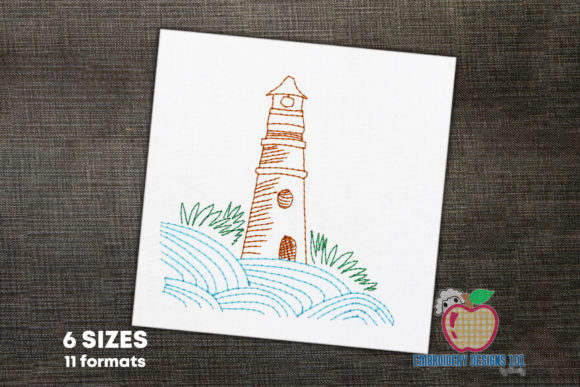
Cape Hatteras Lighthouse: A Classic Coastal Embroidery Design
As an embroidery designer preparing products for a weekend craft fair, my first task is to evaluate a design’s potential from a seller’s perspective. The Cape Hatteras Lighthouse Tower embroidery file immediately strikes me as a classic, versatile coastal motif. It doesn’t scream “vacation” in a garish way; instead, it feels timeless and elegantly decorative. This is a significant advantage. While the description rightly notes it’s perfect for vacation-related projects, its appeal isn’t limited to those who’ve visited the lighthouse. It taps into a broader love for nautical themes, Americana, and landmark imagery, which has a steady market at handmade events.
First Impressions and Product Application
The mood of Cape Hatteras Lighthouse Tower leans toward rustic, premium, and decorative. It’s a focal-point design, not a tiny accent. This means I need to think about products where it can be showcased prominently. My booth display for this fair will include embroidered tote bags, aprons, tea towels, caps, patches, and pillow covers. For this design, certain applications will naturally stand out.
On a sturdy canvas tote bag or a market bag, Cape Hatteras Lighthouse Tower becomes a statement piece. The vertical tower format lends itself perfectly to the center panel of a bag. It looks intentional and high-quality, elevating a simple tote into a giftable handmade product. Similarly, on a pillow cover, it creates an instantly themed, home-decor item that feels cozy and crafted.
For kitchen textiles like aprons and tea towels, careful evaluation is needed. The design’s potential success here depends on its stitch density and detail size. A very dense, intricate lighthouse might be less practical on a textured towel where stitches can sink in, or on an apron that requires frequent washing. However, if the design is well-balanced, a tea towel with this embroidery could be a bestseller—it’s a functional art piece. As an embroidery designer, my note here is to always test on scrap fabric first, especially on the textured linen of a towel, to check thread contrast and clarity.
Practical Production for the Craft Fair Booth
Batch production is key for a successful fair. Cape Hatteras Lighthouse Tower feels repeatable. Its iconic, recognizable shape is easy for customers to understand at a glance from across the booth, which is crucial for grabbing attention in a busy market. However, the phrase “comes with multiple” in the description suggests there might be variations or sizes. This is vital information for production. I need to check the included files to determine the ideal hoop size for each product I plan to make.
For caps and curved surfaces, a smaller version of the design would be essential. Tiny details or small lettering (if included) could lose clarity on a cap’s curved front. A simplified, bold outline version might be perfect for that application, while a more detailed version shines on flat surfaces like a patch or pouch. Creating an embroidered patch featuring Cape Hatteras Lighthouse Tower is a smart move—it’s a lower-cost item that appeals to a wide audience and can be produced efficiently.
Photography for my Etsy listings and printable mockups is another consideration. This design, with its strong silhouette and likely good contrast, should photograph well, making the handmade quality evident online. Dark fabrics might require a lighter thread palette to ensure the lighthouse pops, enhancing visual appeal and perceived value.
Critical Designer Notes Before Production
- Test on Scrap Fabric: Always stitch out the design on a scrap of the exact fabric you’ll use—be it canvas for a bag, linen for a towel, or twill for a cap. This reveals any issues with stitch density or puckering.
- Check Thread Contrast: Review how the chosen thread colors look on both light and dark backgrounds. A classic lighthouse often uses whites, blacks, and reds, but they need to stand out.
- Review Spacing and Hoop Size: Confirm the hoop size required for your intended product. A design too large for a small pillow cover won’t work.
- Inspect Stitch Density: Dense stitch areas can be challenging on thicker fabrics like bag canvas; using the right stabilizer is non-negotiable.
- Create a Real Mockup: Before batch-producing 20 tote bags, make one complete finished product. This shows how it looks in person and helps gauge customer interest.
- Compare Fabric Colors: Offer the design on a few different fabric colors at your booth—a natural linen, a navy blue, a white cotton—to appeal to different tastes.
- Confirm Commercial Licensing: The description mentions it’s a machine embroidery design. Before selling any finished product, verify that your license permits commercial use at craft fairs and in your small shop.
Selling Power at the Handmade Market
In the context of my Around The World themed products, Cape Hatteras Lighthouse Tower fits beautifully as a celebrated American landmark. At the fair, I plan to group it with other coastal or national landmark embroideries to create a cohesive display section. This strengthens booth display strength and brand consistency for my embroidery business.
Its selling power lies in its emotional resonance. It’s more than a graphic; it’s a memory trigger for some and a beautiful symbol for others. This drives buyer engagement. When a customer sees it embroidered on a tea towel or a pillow cover, they perceive it as a quality handmade product, not a generic print. The time and skill evident in the embroidery add value.
For boutique makers and creative entrepreneurs, this design offers flexibility. It can be the centerpiece of a product line or a complementary item within a broader collection. As a digital embroidery file, it’s a reliable design asset. Its classic nature means it won’t feel dated next season, allowing for inventory that carries over.
Final Advice for Craft Fair Success
To maximize the potential of Cape Hatteras Lighthouse Tower, focus on products where its decorative, focal-point quality shines. Premium items like a well-made tote bag or a decorative pillow cover allow the design to command the price it deserves. Simpler, smaller applications like patches or caps serve as accessible entry points for customers.
Always, the foundation is practical production. Use the right stabilizer for the fabric. Manage thread colors to ensure contrast. And most importantly, make at least one impeccable sample for your booth. That finished product, displayed beautifully, is what will turn a digital embroidery file into a craft fair product that sells, capturing the eye and the heart of someone walking by, reminding them of the sea, a trip, or simply the beauty of a handmade object.