Dancing Watermelon Embroidery Design: A Business Review
When a new machine embroidery design crosses my desk, I immediately think about how it will live on real products that real customers touch, wear, and wash. The Dancing Watermelon file arrived with a cheerful description and plenty of personality, but the real test is always the same: can this design help a small business sell more merch, build a stronger brand, and create something people genuinely want to keep? After stitching it out and studying the details, I have thoughts that every boutique owner, Etsy seller, custom apparel decorator, and handmade brand should hear before adding this to a production lineup.
First Impression: Playful Energy Meets Commercial Potential
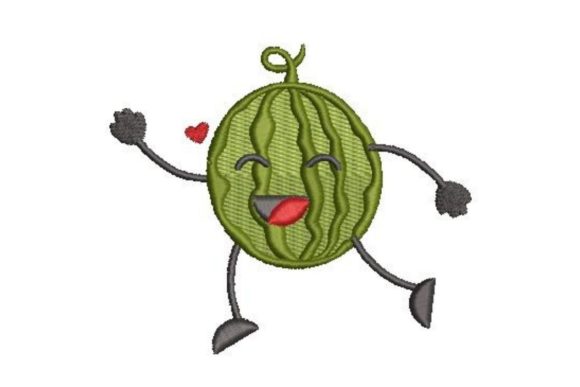
The design title Dancing Watermelon immediately sets a tone that is warm, whimsical, and unapologetically fun. A happy watermelon dancing suggests movement, personality, and a seasonal vibe that leans directly into summer collections, food-themed merchandise, picnic-inspired product lines, and anything tied to fresh, fruity branding. From a visual identity standpoint, this is not a corporate or rigid design. It feels handmade, approachable, and slightly rustic in spirit, even before examining the stitch structure. For small businesses that trade on charm, friendliness, and community connection, this personality aligns beautifully with customer expectations. A bakery, a florist, a neighborhood café, a pet treat brand, or a children's clothing line could all use this design without it feeling out of place. The emotional response it triggers is disarming and positive, which is exactly what you want when your logo or branded accent sits on a product someone wears or carries in public.
Evaluating Dancing Watermelon as a Branded Patch
Patches are having a sustained moment in small business merch strategy, and for good reason. An embroidered patch feels premium, tactile, and collectible. When I consider Dancing Watermelon for patch conversion, several factors come into play. The design likely features rounded shapes, curved outlines, and cheerful details that can translate well to patch format if stitch density is managed correctly. A patch with overly dense fills can become stiff, curl at the edges, or feel heavy on lightweight garments. Before committing to a full production run, I always recommend stitching a single embroidered patch sample on the intended fabric backing and evaluating how the edges behave after trimming and heat application. For café staff caps, denim jacket accents, tote bag centerpieces, or boutique hang tags, a well-executed patch version of Dancing Watermelon could become a signature visual element that customers associate instantly with the brand experience.
Placement Decisions: Where Dancing Watermelon Shines Brightest
Placement dictates how a design is perceived and how professionally it reads on the finished product. Dancing Watermelon has a playful character that works best in specific positions. Chest logo accents on work shirts or café uniforms give it visibility without overwhelming the garment. Sleeve details on lightweight summer button-downs create a surprise element that sparks conversation. Cap embroidery on the front panel or even a subtle side placement on a dad hat can turn a basic accessory into branded merch that customers actually want to wear. Tote bag design is another natural home for this file, especially on natural cotton or canvas surfaces where the thread texture can stand out beautifully. Apron embroidery for bakery staff, florist teams, or market vendors places the design in a context that reinforces freshness and handmade quality. I would be slightly cautious about placing Dancing Watermelon on very dark uniforms where color contrast could shift the playful mood into something visually harsher than intended. Soft backgrounds, warm neutrals, and light-washed fabrics tend to amplify the charm of the design rather than fighting against it.
Stitch Density, Detail Clarity, and Small-Scale Performance
One of the first tests I run on any new design file is reducing it to a small patch size and watching what happens. Details that look crisp at four inches can blur, merge, or lose readability at one and a half inches. With Dancing Watermelon, the key concerns would be any fine facial features, tiny seed-like accents, and the spacing between dancing limbs and the melon body. If the stitch density is too high in these concentrated areas, the thread can pile up, cause puckering, or create a stiff, uncomfortable surface on wearables. Low stitch density, on the other hand, might leave gaps in coverage that expose the fabric underneath and weaken the visual impact. I always recommend opening the embroidery file in your editing software, examining the stitch angles, and running a test stitch on a fabric scrap that matches your production material. Pay close attention to thread color contrast between the watermelon flesh, rind, and any facial or motion accent details. High contrast reads bold and graphic; low contrast reads soft and tonal. Both can work, but you need to decide which direction supports your brand identity before ordering fifty embroidered tote bags that might not match your vision.
Thread Colors, Fabric Texture, and Production Realities
Thread colors make or break the final aesthetic. A watermelon design naturally calls for pink, red, green, and likely black or dark brown for seeds and facial features. The saturation of those thread choices against your chosen fabric changes everything. On textured fabrics like slub cotton, linen blends, or loopback fleece, fine details can sink into the surface and lose definition. I suggest testing Dancing Watermelon on a smooth, stable woven or a tightly knit jersey before moving to trickier surfaces. Stabilizer choice is equally critical. Cutaway stabilizer generally provides the durability needed for items that will face frequent washing, which includes almost everything in the small business merch and uniform category. Tear-away stabilizer might work for a decorative wall hanging or a limited-use event item, but for aprons, caps, tote bags, and work shirts, you want the embroidery to outlast the garment itself. When I think about commercial production, the design must hold up through dozens of wash-dry cycles without distorting, fraying, or losing its joyful expression. Dancing Watermelon can absolutely meet that standard if the foundational choices around stabilizer, thread quality, and fabric pairing are made with intention rather than convenience.
How This Design Shapes Brand Perception and Customer Trust
Small business branding lives in the details. A poorly stitched logo on a staff apron can quietly chip away at the perception of quality, even if the products or services themselves are excellent. Conversely, a crisp, charming embroidery accent like Dancing Watermelon can elevate the entire customer experience. When a buyer notices a thoughtfully embroidered patch on a tote bag, a playful sleeve detail on a uniform shirt, or a custom cap with precise stitching, they intuitively associate that care with the brand behind it. Dancing Watermelon communicates warmth, creativity, and a willingness to be distinctive rather than generic. For an Etsy seller shipping handmade goods, the embroidery becomes part of the unboxing moment. For a bakery handing over pastry boxes in branded totes, the design adds a layer of personality that competes memorably with larger, less personal competitors. Visual consistency across all embroidered touchpoints strengthens recognition and builds the kind of repeat buyer trust that small businesses rely on. One design, used intentionally across multiple design assets, can do heavy lifting for brand storytelling without requiring a massive graphic design budget.
Commercial Use, Licensing, and Digital File Considerations
Before integrating Dancing Watermelon into a product line, check the commercial embroidery licensing terms. The product description indicates the design includes multiple file formats and can be used with multiple setups, but the exact scope of commercial use should be verified. Can you stitch it on products you sell? Can you create embroidered patches for resale? Can the finished products appear in your Etsy shop, at craft fairs, or on your business website? These questions are not about limitation but about clarity and legal safety. Nothing disrupts a small business faster than a licensing misunderstanding. Once confirmed, the digital embroidery file becomes a production asset that can be used repeatedly across seasons, collections, and product types. The design only needs to be purchased once but can generate revenue indefinitely when applied to the right finished product lineup. For small business owners who understand the value of reusable production assets, a versatile embroidery file like Dancing Watermelon is not an expense; it is an investment in visual consistency and scalable merch creation.
Practical Designer Notes for Real-World Production
After years of running embroidery projects for small business clients, I follow a checklist that prevents costly mistakes and embarrassing client conversations. Here is what I would do with Dancing Watermelon before greenlighting any production run:
- Test in black and white first. Remove color from the equation and evaluate the design silhouette. If the shape reads clearly without color, it will read even better with it.
- Stitch at small patch size. Reduce to one and a half inches and check if the dancing motion and facial details remain legible. This tells you if the file works for cap side patches, lapel accents, or mini branded tags.
- Review thread color contrast. Hold the stitched sample at arm's length. Do the watermelon rind and flesh separate visually? Do the seeds pop or blend? Adjust thread choices if needed.
- Inspect spacing and pull compensation. Look for gaps between adjacent color blocks. On curved shapes, small gaps can appear where push and pull distort the original artwork during stitching.
- Confirm hoop size compatibility. Know your machine's limitations before uploading the file. The description mentions multiple formats, which usually accommodates various machines, but hoop dimensions still dictate what is possible on your specific setup.
- Test on real fabric. A sample on cotton canvas will behave differently than a sample on performance polyester or stretch denim. Match your test fabric to your actual production fabric.
- Use proper stabilizer. Cutaway for durability on wearables, especially for items that clients will wash and wear repeatedly.
- Create a printable mockup for client approval. Even a simple digital preview stitched onto a product photo helps manage expectations and secures confident buy-in before production begins.
- Compare beside other design assets. If Dancing Watermelon will live next to an existing logo, wordmark, or secondary graphic on a uniform or product, stitch them side by side and check for visual harmony. Scale, density, and color palette should feel cohesive.
Where to Use Dancing Watermelon with Extra Care
Every design has environments where it thrives and environments where it struggles. For Dancing Watermelon, I would be cautious on highly textured performance fabrics that stretch significantly during hooping. The playful curves that define the design's personality could distort if the fabric shifts mid-stitch. Cap fronts with strong curvature also demand careful hooping and possibly design rotation adjustments so the dancing figure does not warp across the center seam. If the file includes very tiny lettering or micro-details, those elements may not survive the reduction to a small patch or a narrow sleeve placement. High-density areas packed into tight corners can create bulletproof stiffness on lightweight garments, so monitor stitch counts in concentrated zones and consider simplifying if the design feels too heavy on thin summer fabrics. None of these cautions are dealbreakers; they are simply the realities of translating a fun, character-driven design into durable, professional merchandise that upholds the standards of a growing small business.
Final Assessment from a Production Perspective
Dancing Watermelon earns its place in a small business embroidery toolkit not because it tries to be everything to everyone, but because it knows exactly what it is: a friendly, cheerful, seasonal design that connects emotionally and stitches out with personality. For a brand that wants to feel approachable, creative, and memorable, this file opens doors to merch lines, uniform accents, gift items, and event products that carry the brand story forward in a genuinely delightful way. The multiple file formats included broaden compatibility across machine types, which matters when you are scaling production or collaborating with different embroidery partners. Just remember to test, stabilize, sample, and confirm your licensing before you print order forms. A little preparation on the front end ensures that what lands in your customer's hands reflects the quality and care your business stands for every single day.