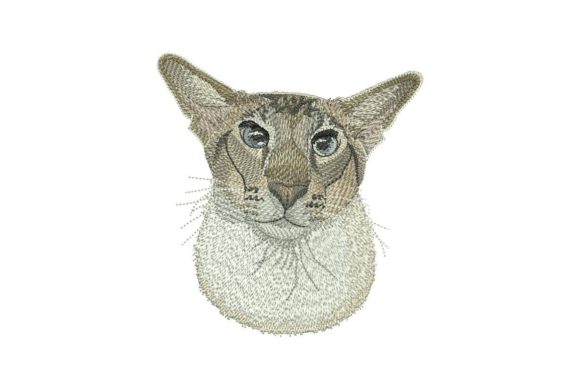
Oriental Cat Embroidery: A Designer's Hands-On Review
When you download an embroidery design for real project use, you’re not just acquiring a file. You’re making a judgment about how it will stitch out, how it will feel on fabric, and ultimately, how it will resonate with your client, your customer, or the recipient of your handmade gift. That’s the lens I’m using to evaluate this Oriental Cat design.
First Impressions: A Quiet, Majestic Feline Presence
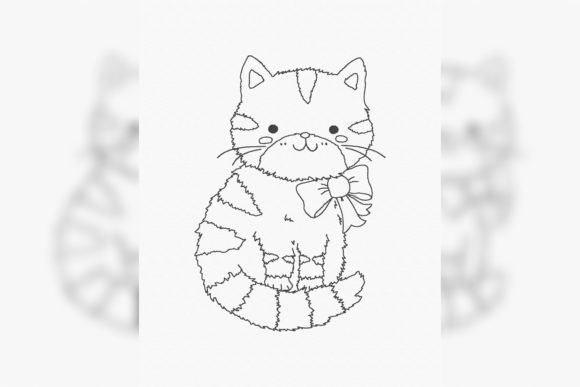
The initial visual hit of this Oriental Cat design is one of serene character. It’s not a playful kitten or a cartoon caricature. The posture and styling suggest a calm, almost noble feline, which creates a mood of elegant tranquility. This is a design that speaks to cat lovers who appreciate a more artistic, stylized representation. The layout feels balanced, and the detail level appears thoughtful—not overly dense, which is a crucial first observation for stitch-out success. Its visual personality leans toward decorative art rather than photorealistic detail, making it a versatile asset for projects that need a touch of graceful charm.
Where This Cat Naturally Belongs: Project Matchmaking
Let me walk you through a real scenario. I’m considering a custom, high-quality tote bag for a boutique. The client wants something unique, not generic. This Oriental Cat design immediately comes to mind for a centered placement. Its elegant shape would frame beautifully on a canvas bag, offering a point of interest that feels special and handcrafted. Similarly, on the cuff of a cozy sweatshirt or the corner of a linen pillow cover, it becomes a signature detail. For baby items—think a delicate nursery blanket or a keepsake bib—the design’s gentle character works wonderfully, avoiding overly sharp or bold aesthetics.
For crafters and small shop owners, this design is a strong candidate for creating a cohesive line of merchandise. Imagine an Etsy listing featuring this cat on an apron, a tea towel, and a patch. The consistent theme builds brand recognition. As a personalized gift, embroidered onto a handkerchief or a kitchen towel, it feels intentional and thoughtful, elevating a simple item into a memorable present.
The Commercial Perspective: Adding Value and Trust
Using a design like this in commercial embroidery or for your craft business products directly impacts perceived value. A clean, well-defined stitch out of this Oriental Cat on a tote bag or cap communicates professionalism. It tells your customer that you care about the clarity and finish of your handmade product. For digital product sellers offering printable mockups or using the design as part of their digital assets, a design with clear, distinct areas (like this one appears to have) creates a more trustworthy and engaging preview for potential buyers.
Performance in Real Stitching: Practical Considerations
Now, let’s move from the screen to the hoop. How will this Oriental Cat perform when the machine starts running? Based on its apparent structure, I’d anticipate areas of satin stitch for definition and fill stitches for the body. The key to its success will be stitch density management. On textured fabrics like sweater knits or on stretchy fabrics for t-shirts, you’ll need to be meticulous with your stabilizer choice to preserve those clean lines, especially any potential delicate corners or outlines.
Dark fabric is a classic test. A design with good contrast in its digital form usually translates well, but always test stitch it on your scrap dark fabric first. This checks the thread color contrast and ensures small details don’t get lost. For projects on curved surfaces like caps, the design’s size and aspect ratio become critical—a too-large or wide design won’t hoop well on a cap’s front panel.
Caution Zones: Where to Proceed Carefully
While this design seems adaptable, some applications require extra care. If you’re thinking of very small hoop sizes, inspect the design’s smallest elements closely. Tiny details might simplify or vanish. On thin fabrics like silk for a special gift, the stitch density must not be so high that it puckers or distorts the delicate material. For products destined for frequent washing, like baby clothes or kitchen linens, a robust stitch construction is vital—again, a test stitch on similar fabric is your best friend here.
Essential Designer Notes Before You Hoop
My final advice, always, is to treat every new design like a professional prototype session. For this Oriental Cat embroidery file:
- Stitch it out on scrap fabric first. This is non-negotiable. You’ll see the true stitch density, check for any jump stitch issues, and understand how the threads interact.
- Review it in both light and dark background mockups, even digitally, to plan your thread palettes.
- Confirm the exact hoop size requirements from the provided information. The description mentions multiple embroidery file formats, which is excellent for machine compatibility, but always match the format to your machine and confirm the intended hoop size.
- If you plan to sell the finished product—the tote bag, the sweatshirt, the embroidered patch—or use it in commercial embroidery projects, explicitly confirm the licensing terms. Don’t assume.
This Oriental Cat design, from a practical designer’s viewpoint, holds strong potential. Its majestic and unique character can add a lovely feline essence to creations that range from personal gifts to small shop merchandise. By approaching it with these realistic, hands-on steps, you ensure that the beautiful digital file becomes an equally beautiful, trusted finished product.