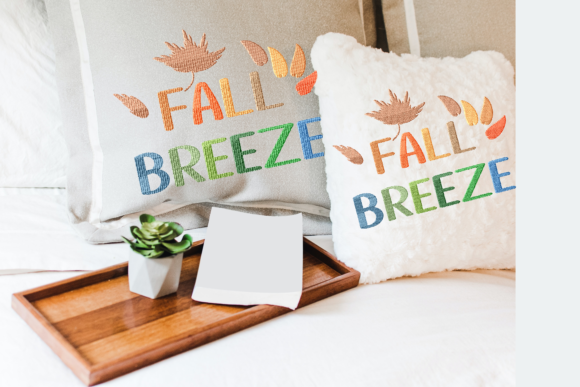
Fall Breeze Embroidery: A Professional Designer's Real-World Review
When you’re evaluating a new embroidery design for real work—whether it's for a client project, your own handmade shop, or a thoughtful gift—it’s not about the marketing description. It’s about how it translates from a digital embroidery file into a tangible, beautiful finished product. Today, I’m looking at Fall Breeze through that lens.
The Immediate Mood: A Delicate Touch of Autumn
The first impression of Fall Breeze is exactly what its name suggests: gentle and seasonal. It doesn’t scream ‘fall’ with heavy, dense motifs; it whispers it. This creates a mood of subtle elegance rather than bold celebration. For a designer, that’s a valuable distinction. The visual personality leans towards soft, likely featuring clean lines and simple shapes that evoke a breeze rather than a gust. This delicate autumnal touch, as mentioned in its description, tells me it’s meant to complement a fabric, not dominate it.
This isn’t a design for a statement jacket patch. It naturally belongs to projects where the embroidery is an accent, a finishing touch that adds personality without overwhelming the base item. Think of the decorative pillow on a cozy sofa, the corner of a linen kitchen towel, or the subtle branding on a boutique’s canvas tote bag. Its layout suggests it will stitch out cleanly, with a detail level that should be clear without being fussy—a crucial balance for machine embroidery on varied fabrics.
Where Fall Breeze Shines in Real Projects
Let’s walk through a real-life scenario. Imagine you’re preparing a custom order for an embroidered tote bag as a personalized gift. The client wants something autumn-themed but not kitschy. Fall Breeze comes to mind immediately. Its simplicity means it won’t get lost on the bag’s larger surface, and its delicate nature aligns with a stylish, usable accessory. Stitched perhaps in a single tonal shade or a soft palette of autumn thread colors, it would elevate a simple bag into a boutique product.
This thinking extends to countless other applications. On a women’s sweatshirt or a child’s lightweight jacket, it becomes a charming, wearable accent. On a decorative pillow cover, it integrates seamlessly into home decor. For small business merchandise, like an Etsy seller’s line of tea towels or aprons, it offers a seasonal design that feels handmade and special, boosting product value and buyer engagement. It’s also a strong candidate for baby embroidery items—a nursery decor blanket or a delicate motif on a baby shirt—where gentle themes are preferred.
For commercial embroidery or craft fair products, Fall Breeze represents a versatile design asset. It’s likely quick to stitch, which matters for volume, and its aesthetic is broadly appealing, aiding in giftability and recognition. When creating printable mockups for your digital embroidery file listings, a design like this presents well on both light and dark fabric backgrounds, showing its adaptability.
Practical Considerations and Where to Be Careful
While the description suggests versatility, a professional must think about execution. The term “delicate” hints at thinner lines and possibly smaller elements. Therefore, using Fall Breeze on heavily textured fabrics, like some sweaters or looped towels, might compromise stitching clarity. On stretchy fabric, like a t-shirt, you’ll need excellent stabilizer to prevent puckering around those finer details.
Dark fabric backgrounds require careful thread color contrast planning. A light, delicate design stitched in a slightly off-white on a black sweatshirt could look stunning, but you must test it. Embroidering on curved surfaces, like caps, demands extra attention to hooping and stabilizer to ensure the design’s shape doesn’t distort. Also, if the design includes any tiny lettering or intricate decorative accents, you’ll want to inspect those small details on a scrap first to ensure they stitch out cleanly at your intended hoop size.
Products destined for frequent washing, like apparel or kitchen towels, need a design that holds up. Assess the implied stitch density. A very dense fill stitch area might be stiff, while a balanced use of satin stitch and running stitch should remain comfortable and durable. This affects customer trust in your handmade products—they should last.
The Impact on Your Work and Your Business
Choosing a design like Fall Breeze influences more than just a single project. For creative entrepreneurs, it affects brand consistency. If your shop’s vibe is soft and elegant, this design reinforces that. Its professionalism in execution—clean stitches, thoughtful placement—directly impacts the perceived value of your finished product. A well-embroidered item with a tasteful design feels premium, not homemade.
For digital product sellers, offering a file with this aesthetic meets a specific customer need: those seeking understated seasonal themes. It fills a niche in your catalog. For apparel decorators, it’s a reliable option for clients who want autumn embroidery but dislike the usual clichés. It enhances visual appeal through subtlety, which can be a powerful selling point.
Essential Designer Notes Before You Hoop
Before committing Fall Breeze to a client’s item or your own inventory, here’s my standard practice checklist. I strongly advise you to follow it:
- Always test the design on scrap fabric identical to your project fabric. This reveals how stitch density interacts with the texture.
- Check thread color contrast by stitching a sample on both light and dark backgrounds. Sometimes a digital preview isn’t enough.
- Review the actual stitch-out for any small details that might need adjustment, like tight corners in satin stitch.
- Confirm the minimum recommended hoop size for clarity. A delicate design might need a smaller hoop than a bold one.
- Use proper stabilizer for the fabric type. This is non-negotiable for maintaining the design’s integrity.
- Consider testing it in a simple black and white mockup to see its form without color, which helps judge its fundamental shape.
- Critically, check the licensing terms for this embroidery file before selling finished items or using it in commercial embroidery projects. The description provided doesn’t specify this, so you must verify it yourself.
- Finally, ensure the design files are compatible with your machine and that you understand the included formats (whether it’s a standard applique design or a pure stitch file). Again, verify this from the source.
By taking these steps, you transform a simple download into a reliable, profit-ready design asset. Fall Breeze, with its beautiful and simple autumn theme, has the potential to become a go-to in your seasonal toolkit. It’s not a design for every project, but for the right project—where a delicate autumnal touch is exactly what’s needed—it will stitch out into something quietly perfect.